
How to Find Recently Released Baltimore City Inmates
There is no single button for this. The city does not post a release log. Detention runs through the state, so the records sit in state systems. The fastest first check is the DPSCS Incarcerated Individual Locator. If a person is no longer listed, that may mean release. But it is not proof.
The locator shows only people currently in custody. It does not list anyone who has left by release, escape, or any other reason. It also skips some short-sentenced detainees. So a missing name can mean many things. To confirm an actual release, you usually need a second source, such as a phone call or a notification service.
Practical paths work best in combination. Set up an alert so you hear about a release as it happens. Call the booking center for a person held in the city. Check the court file, since a release on bond or an order shows up as a docket entry. For people sent to state prison or held federally, use the matching locator covered below.
Important: Absence from the state locator is not proof of release. The tool does not list people who have left custody, and it skips some short-sentenced detainees, so always confirm a release with a second source before you act on it.
Setting Up Release Notifications
The best way to learn about a release is to register for alerts. VINELink is the public service for this. It tracks custody status for participating agencies and sends a notice when status changes. You set it up once, then it watches for you. That beats calling the jail every day.
VINELink lives at vinelink.com. You pick the state, find the person, and add a contact method for alerts. Registration is free.
The screenshot is from VINELink.
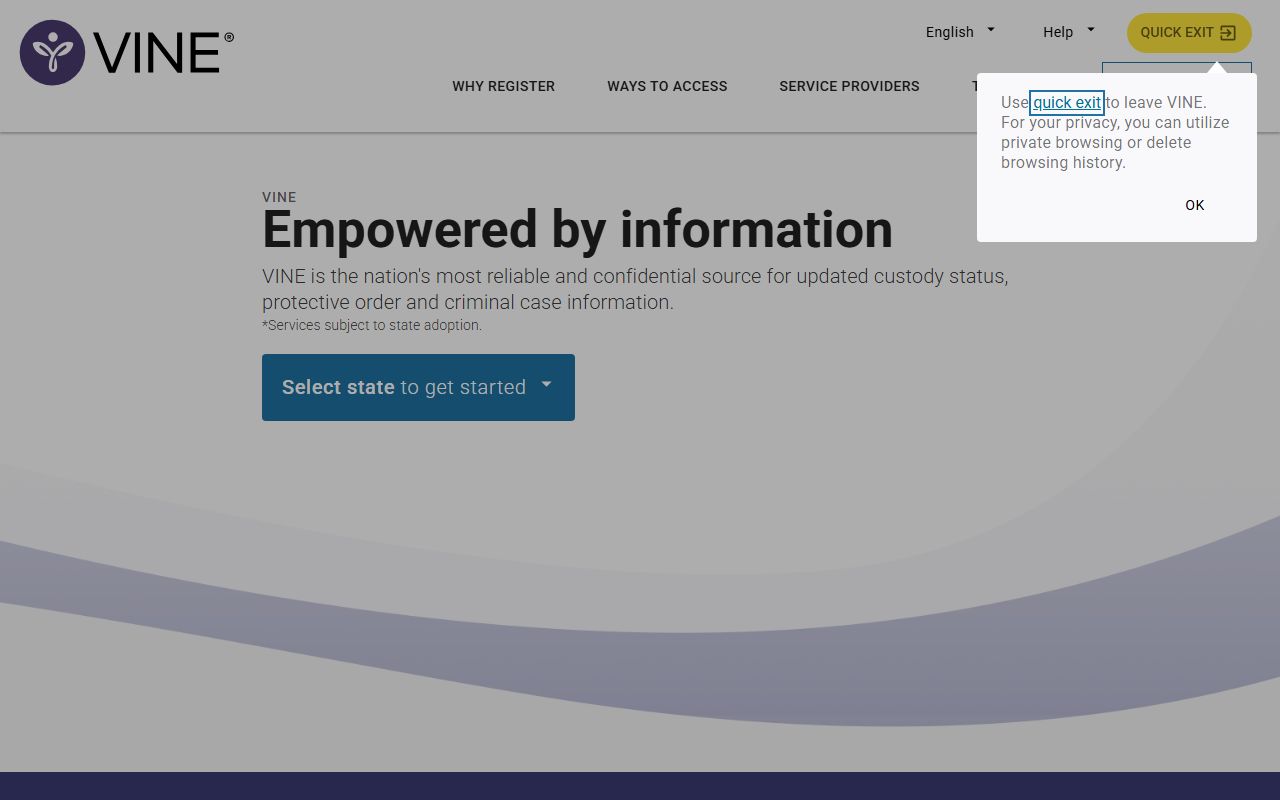
After setup, VINELink can notify you by phone or email when custody status changes.
- Open VINELink and select Maryland.
- Search for the person by name or ID.
- Open the matching custody record.
- Register for alerts and add a phone number or email.
- Confirm the contact method so alerts can reach you.
The VINELink field inventory below shows what the search asks for. Note that coverage depends on which agencies feed the system.
| Field Label | Type | Required | Notes |
|---|---|---|---|
| State | Dropdown / map | Yes | Select Maryland. |
| Name / ID | Text | Yes (one path) | Search by offender name or custody ID. |
| Facility / Agency | Dropdown | No | Narrows to a participating agency. |
| Register for Notification | Button / form | No | Needs a phone or email contact method. |
Searching State and Federal Released Inmates
Where a person went after the city matters. Someone sentenced to state prison stays in the Maryland state system. Someone convicted of a federal crime goes to the federal Bureau of Prisons. Each has its own locator, and each handles release data a bit differently.
For the state side, the DPSCS Incarcerated Individual Locator lists people held at Division of Correction facilities, Patuxent Institution, and some short-sentenced people at pretrial sites. It shows current housing only. It does not list released people. So for a state release, pair it with VINELink or a direct call.
For the federal side, the Bureau of Prisons keeps a public locator. It covers people held federally from 1982 forward, and it can show a release date for people no longer in custody. That makes it more useful for confirming a federal release than the state tool is for a state release.
The screenshot is from the Federal Bureau of Prisons inmate locator.
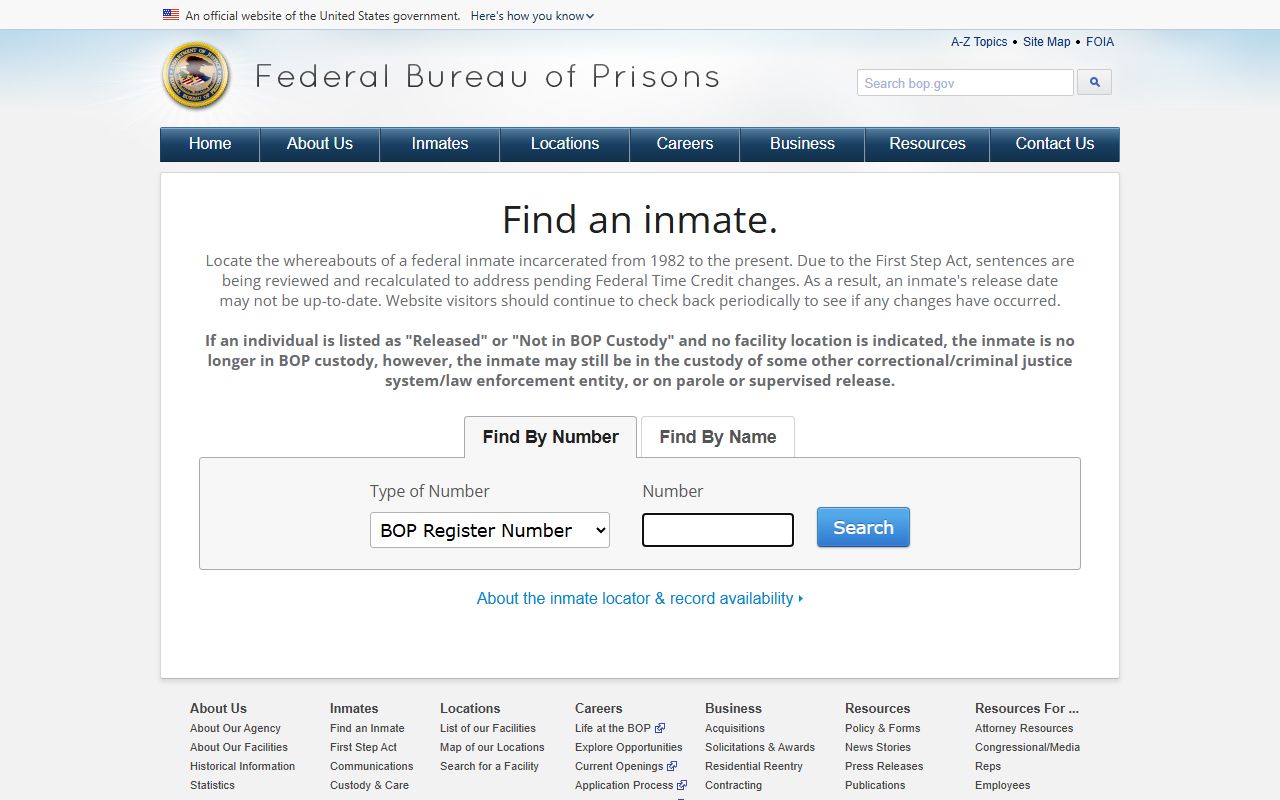
The BOP tool lets you search by number or by name, as the field table shows.
| Field Label | Type | Required | Notes |
|---|---|---|---|
| Find By Number | Tab / radio | One path | BOP Register, DCDC, FBI, or INS number. |
| Find By Name | Tab / radio | One path | First, middle, last, race, age, sex. |
| First Name | Text | No | Used on the name path. |
| Last Name | Text | Yes (name path) | Used on the name path. |
| Race / Age / Sex | Dropdown / number | No | Narrow a common name. |
Verifying a Baltimore City Release by Phone
Online tools have gaps. When they leave you unsure, a phone call settles it. For a person held in the city, call the Baltimore Central Booking and Intake Center. The booking center can confirm whether a person is still held or has been released. This is the most reliable path for a city detainee, since the locator hides released people.
Have the full legal name ready, and a date of birth if you know it. Ask for the records or detainee service line. Family members should call the booking center rather than trust an unofficial release list found online. A release after bond, an order, or a dropped charge also leaves a trace in the court file, so the case docket is a good cross-check.
Baltimore Central Booking & Intake Center
300 E. Madison Street
Baltimore, MD 21202
410-545-8080
Detainee service line for status checks
Division of Pretrial Detention and Services
The O'Brien House, 521 E. Eager Street
Baltimore, MD 21202
410-230-1434
Oversees city booking and pretrial release
The Maryland Sex Offender Registry
Some people carry registration duties after release. Maryland runs a public sex offender registry for registrants who live, work, or attend school in the state. It is a useful tool when you want to know where a released registrant is now. The search is flexible. You can look by name or by area, and the registry offers movement notifications.
The registry sits at the Maryland Sex Offender Registry. The field inventory below shows the main search inputs.
| Field Label | Type | Required | Notes |
|---|---|---|---|
| Search the Registry | Button / link | Yes | Launches the flexible search tool. |
| Name | Text | No | Search a registrant by name. |
| Address / Area | Text / map | No | Search near a location. |
| Notification | Registration | No | Movement notifications are offered. |
Note: The registry tracks post-release duties only, so a person not listed may still have a record, and you should confirm any registry result against the official source.
How a Baltimore City Release Works
Release can happen for several reasons. A person may post bond. A court may order recognizance or pretrial release. Charges may be dismissed or dropped by the prosecutor. A sentence may end. A transfer may move the person elsewhere. Or another court order may issue. Each path ends custody, but each shows up differently in the records.
At release, the facility usually returns personal property and provides release paperwork, which may note court obligations. The state does not publish a Baltimore City release-door schedule or a typical time of day for releases. So do not plan a pickup around a posted time. Confirm timing with the facility, and watch the court file, since a release tied to bond or an order leaves a docket entry you can find through the criminal records page.
Reentry Resources in Baltimore City
Leaving custody is a hard reset. Housing, work, treatment, and legal cleanup all come up fast. Several groups serve people returning to Baltimore. The state and local nonprofits both play a part. The list below covers the main starting points.
- DPSCS Community Reentry Operations – state reentry programs and resources for people leaving custody.
- Maryland Legal Aid – free civil legal help for issues that follow release.
- Maryland Volunteer Lawyers Service – help with expungement, housing, consumer, and tax matters where eligible.
- Goodwill Industries of the Chesapeake – job readiness and training in the Baltimore region.
- Mayor's Office of Neighborhood Safety and Engagement – city violence-prevention and reentry-related work.
For record cleanup, the Office of the Public Defender and court self-help services assist with expungement. A cleaner record can open doors to jobs and housing. Phone and mail contact while a person is still inside also helps a smoother return.
The state mail-services page explains how to send mail and reading material.
The screenshot is from the DPSCS mail services page.
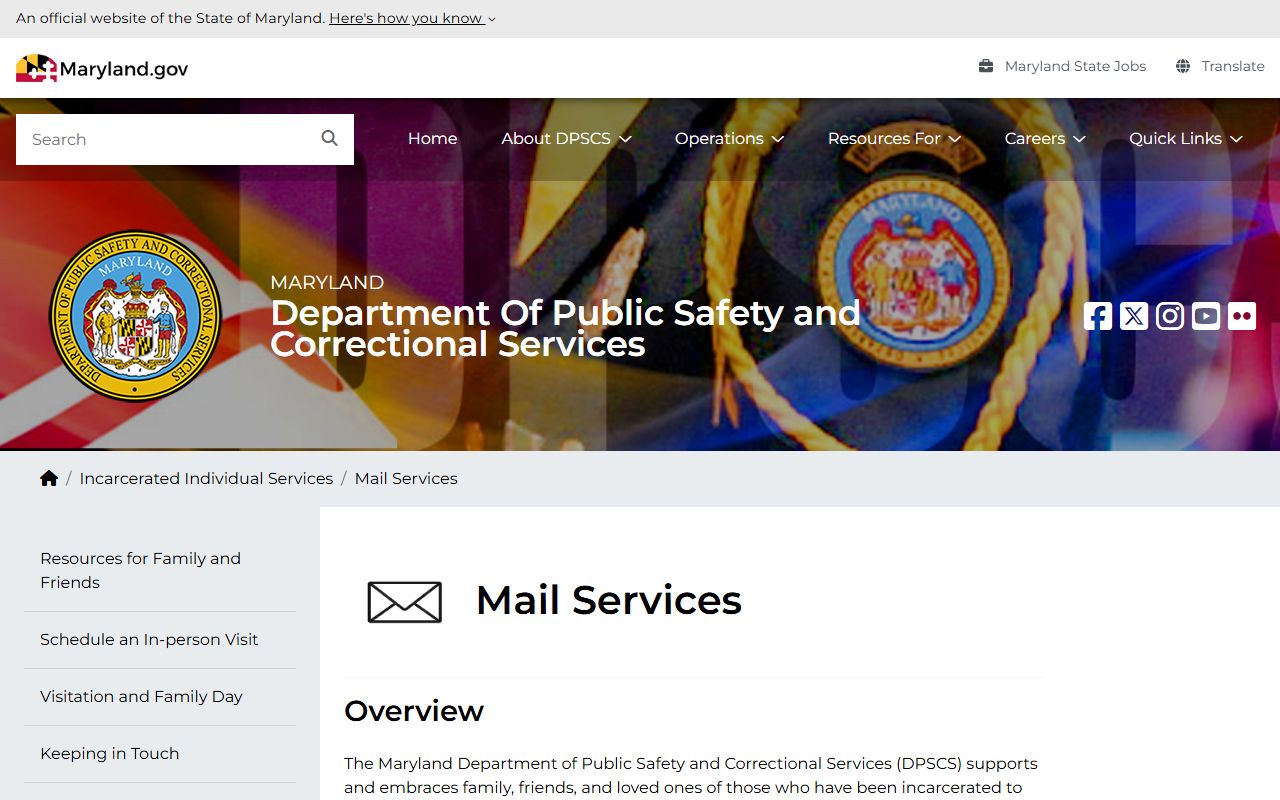
Mail policies change, so check the current page before you send anything.
The state phone-services page covers how calls and money deposits work.
The screenshot is from the DPSCS phone services page.
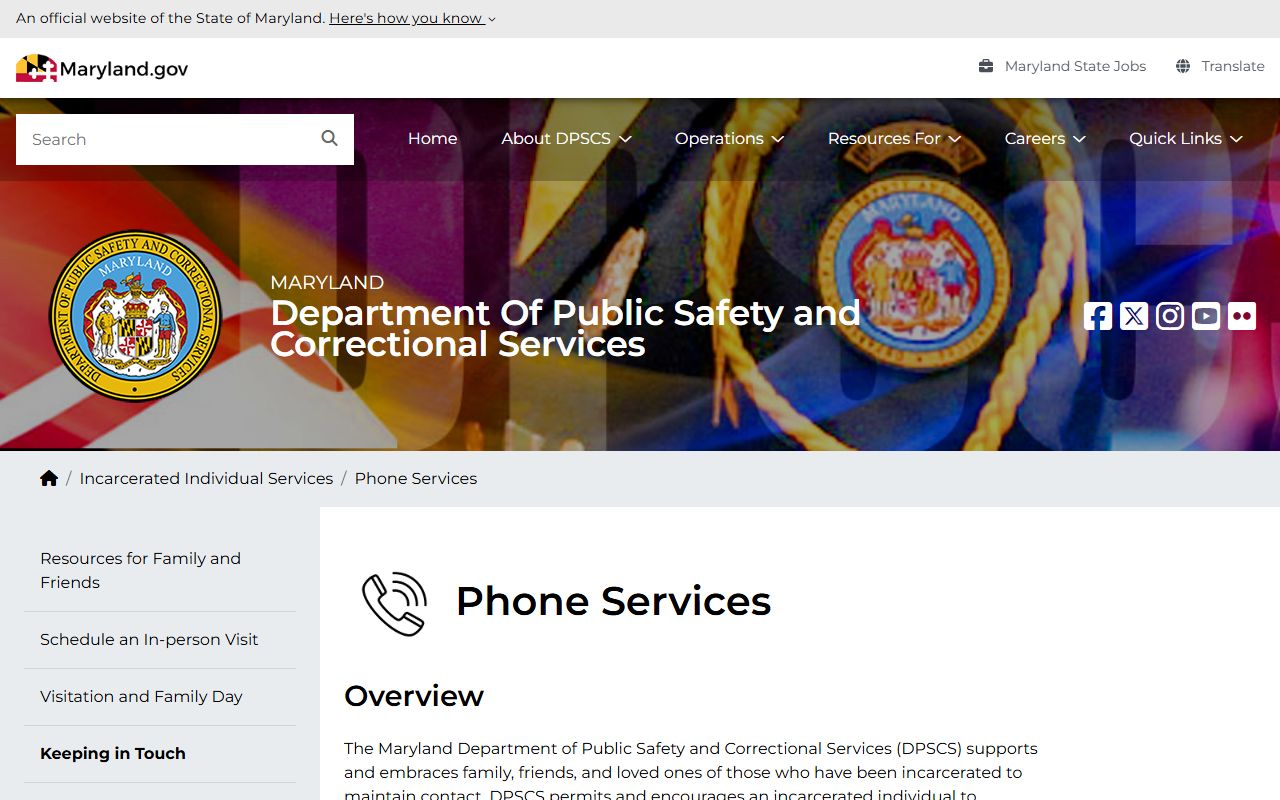
Phone access keeps families in touch while a person waits for release.
Voting and Rights After Release
Release can also restore rights. Maryland generally restores voting rights after a person is released from incarceration for a felony conviction. People held before trial, or held for misdemeanors, are not disqualified on that basis. So many people in city detention keep the right to vote even while held.
The state has a 2024 directive on incarcerated voting rights and procedures. Rules can shift, so confirm current voting status with the state board of elections before an election. Other rights, like firearm rights, follow separate state and federal law and may stay limited after a felony conviction. For legal questions on rights restoration, the reentry legal groups listed above are a good first stop.
Parole and Probation in Baltimore City
Many people leave Baltimore City detention onto community supervision rather than full freedom. Parole is supervised release from a prison sentence before it ends. Probation is court-ordered supervision in place of, or after, time in custody. Both run through the state community supervision arm under the Department of Public Safety and Correctional Services. A supervised person reports to an agent, follows set conditions, and can be returned to custody for a violation.
A supervision status does not show in the inmate locator, so absence there says nothing about parole or probation. A violation can trigger a warrant, which ties this back to the warrant records page. To confirm whether someone is under supervision, contact the supervising office directly.