
Arrest Records in Baltimore City
An arrest record starts at booking. It is made when police take a person into custody and process the arrest. The record names the person, lists the charge or charges, and notes the date and the arresting agency. In Baltimore City the main police agency is the Baltimore Police Department. The Baltimore Police Department posts news, alerts, and contact paths for records, and it is the agency behind most city arrests. Booking and detention, though, happen at a state facility, which sets Baltimore City apart from most counties.
Here is the key point about the Baltimore Police Department and arrest data.
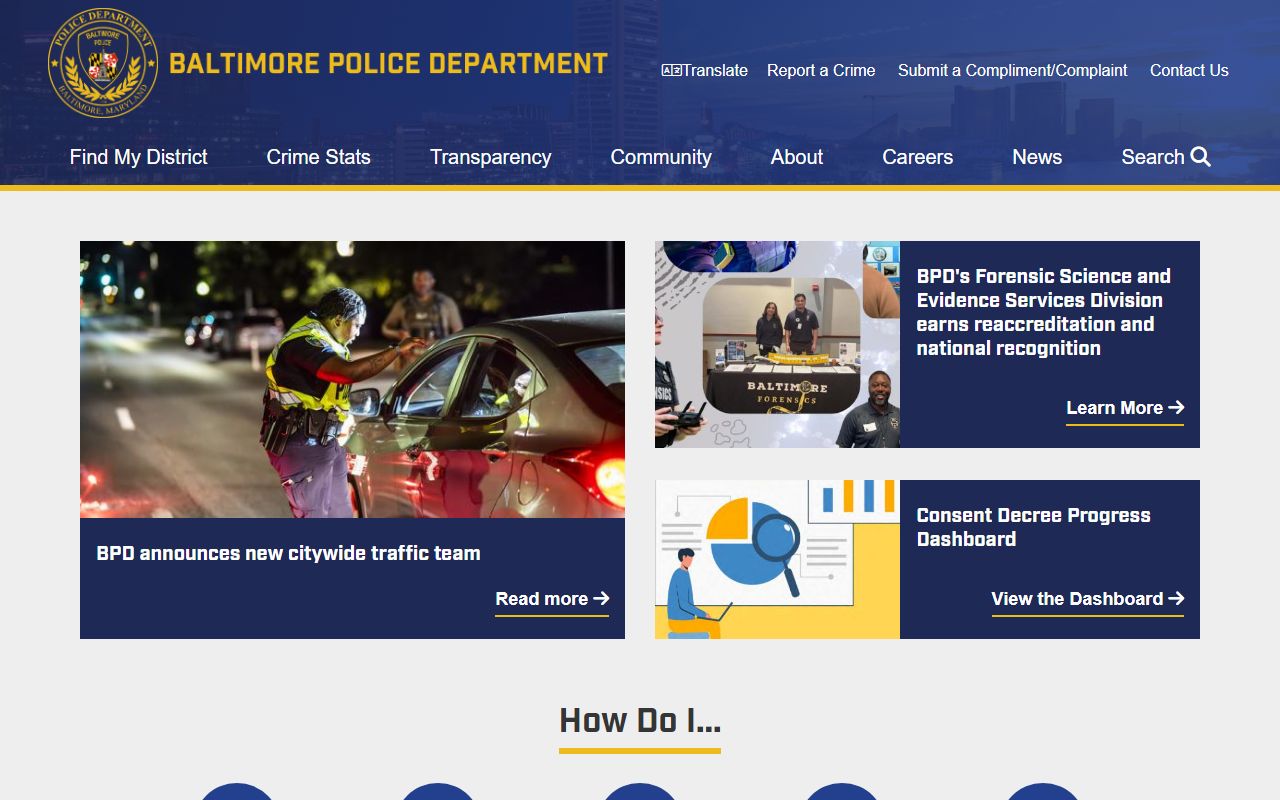
The department's site is the official source for city policing and records contacts, not a third-party site.
An arrest record is not the same as a criminal court record, and neither one proves guilt. An arrest record shows the booking event. A criminal court record shows what the court did with the case after charges were filed. A conviction record shows a guilty finding or plea. These are three separate things. For the full case file and the court history, see the Baltimore City court records page. Arrest and booking data is the focus here.
How to Search Baltimore City Arrest Records
There is no single city arrest blotter portal with mugshots for Baltimore City. So a search usually runs on two tracks. The first track checks who is in custody now. The second track checks the court case tied to the arrest. To find someone booked recently, use the DPSCS Incarcerated Individual Locator. To find the charge and case, use the Maryland Judiciary Case Search and select Baltimore City. Case Search is free and shows a case summary, not the full file.
- Open the official Case Search portal and pick Party Name Search.
- Type the legal last name. For a partial name, add a percent sign, like Smith%.
- Select Baltimore City and add a filing date range to stay under the 500-record limit.
- Open the matching case and note the charge, court, and status.
- For custody status, run the name through the DPSCS locator.
Case Search is a summary of the official file. The Maryland Judiciary says so plainly. For a full charging document or a certified copy, contact the clerk where the case was filed. The locator shows current housing, not charges or release dates. Some short-sentenced detainees may not appear at all.
Baltimore City Booking and Central Booking
Baltimore City is unusual. Jail and pretrial detention are run by the state, through the Maryland Department of Public Safety and Correctional Services, not by a county sheriff. Everyone arrested in the city, or arrested on a city warrant, comes through the Division of Pretrial Detention and Services. The main intake point is the Baltimore Central Booking and Intake Center. The Baltimore City Sheriff's Office still handles courthouse security, civil process, evictions, and warrant work, but it does not run the jail.
Central Booking opened in 1995. It handles intake, identity processing, holding, and the early charging review. After intake, a District Court commissioner reviews charges and sets initial release terms. From there a person may be released or held for a bail review. The contact card below covers the main intake facility.
Baltimore Central Booking & Intake Center
300 E. Madison Street
Baltimore, MD 21202
410-545-8080
Run by DPSCS, not a county sheriff.
Note: Central Booking is a state facility, so a Baltimore City arrest does not produce a county sheriff jail roster the way many other counties work.
Arrest Records vs. Criminal Court Records
An arrest happens at booking. A court record starts later, when charges are filed and a case opens. The two records come from different offices and hold different facts. Mixing them up is a common mistake. The table sets them side by side.
| Arrest Record | Criminal Court Record | |
|---|---|---|
| Source | Police and DPSCS | Court clerk |
| Created When | Booking | Charges filed |
| Contents | Booking info, charges, custody status | Pleadings, motions, disposition |
| Where to Find | DPSCS locator, police records | Case Search and the clerk |
For the court side of any arrest, the full case history sits on the court records page. Traffic-based arrests, such as a DUI, route through District Court too; see traffic court records for that overlap.
Charges vs. Convictions
Being charged is not the same as being found guilty. A charge is an accusation. A conviction is a verdict or a guilty plea. The burden of proof is far higher for a conviction. Many charges end in dismissal, acquittal, or a drop by the prosecutor. The table breaks down the difference.
| Charge | Conviction | |
|---|---|---|
| Stage | Accusation | Verdict or plea |
| Burden of Proof | Probable cause | Beyond a reasonable doubt |
| Public Record | Often, with limits | Yes, with limits |
Some outcomes were pulled from online view under 2024 changes. Charges that ended in nolle prosequi, dismissal, or acquittal may no longer show on Case Search. Older stet charges drop off after three years. A cannabis possession charge that was the only charge and was disposed before July 1, 2023 is also off the online view. These may still be public at the courthouse if not otherwise sealed.
Background Checks and CJIS
Case Search is not a background-check tool. The Maryland Judiciary says so directly. It is a case summary, not a vetted criminal history. For an official, fingerprint-supported criminal history, the path runs through the Criminal Justice Information System, or CJIS, at DPSCS. That is the state record used for licensing, many jobs, and other formal checks. A casual name search and an official CJIS report are not the same thing.
Important: This is a private site and not a consumer reporting agency under the FCRA, so its data cannot be used for credit, employment, tenant, or insurance decisions.
Sealed vs. Expunged Arrest Records
Maryland treats sealing, shielding, and expungement as different things. Expungement removes eligible items from public view across court and police files. Sealing limits who can inspect a record. Shielding hides a record but keeps it for authorized use. The table shows the main split between sealed and expunged.
| Sealed | Expunged | |
|---|---|---|
| Visibility | Hidden from the public | Removed from public inspection |
| Law Enforcement | Limited access kept | Very limited access |
| Eligibility | By court order under Criminal Procedure shielding rules | By disposition, charge, and waiting period |
Expungement eligibility for many non-conviction outcomes sits in Criminal Procedure § 10-105. Some listed convictions can be expunged after a waiting period under Criminal Procedure § 10-110. Eligibility depends on the outcome, the charge type, the wait, and whether related charges are also eligible. The Judiciary warns people to keep copies of any expungement order, since the record may be hard to get later.
Mugshots and Booking Photos
Mugshots are booking photos taken at intake. Baltimore City does not run a public mugshot gallery the way some sheriff sites do, because detention is state-run. There is no city blotter feed with photos for the public. Many sites that post mugshots are private aggregators, not official sources, and their data can be wrong or out of date. For a real custody check, the DPSCS locator is the right tool, and it shows housing status rather than a photo. Court and charge data comes from Case Search and the clerk.
The Baltimore City State's Attorney
The prosecutor in the city is the Office of the State's Attorney for Baltimore City, led by Ivan J. Bates. The office decides which arrests become charges and runs the prosecution. It has divisions for District Court, felony and violent-crime units, economic crimes, police integrity, and victim and witness services. The District Court Division handles misdemeanor cases and incarcerable traffic offenses in the city.
The office posts its structure online, which helps you see who handles what.
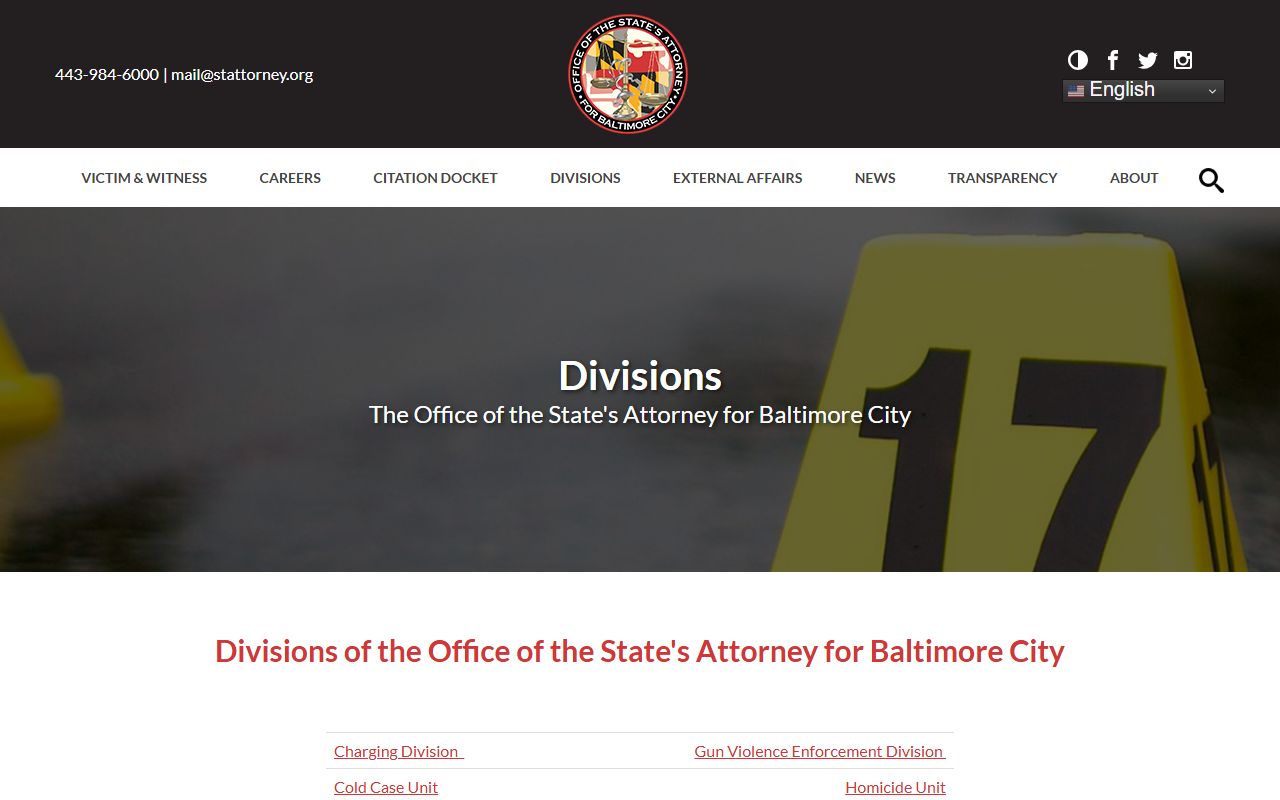
The State's Attorney divisions page lists each unit and its focus. A short profile sets out the current State's Attorney and the office's priorities.
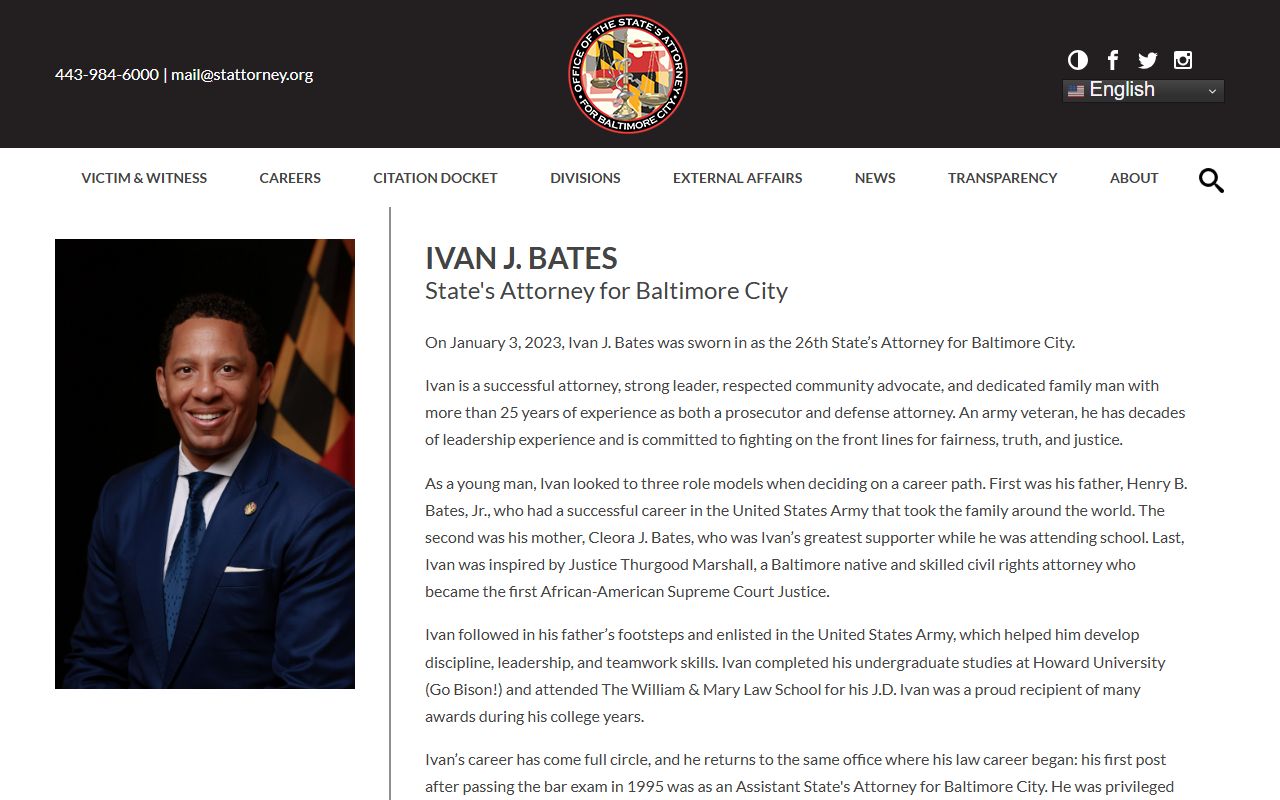
The Ivan J. Bates biography page covers his role as the city's lead prosecutor. The decision to charge, drop, or amend a charge after an arrest rests with this office.
Public Defender Help in Baltimore City
People who cannot afford a lawyer may qualify for the Maryland Office of the Public Defender. OPD provides indigent defense statewide and runs a Baltimore City office. For criminal or traffic cases that carry possible jail time, a District Court commissioner checks financial eligibility. Applicants fill out a written form and provide income, expense, and asset details. If found eligible, the person must then contact OPD to set up representation.
The OPD homepage is the place to start an application.

The Office of the Public Defender site explains who qualifies and how to apply. The application page itself walks through the steps.
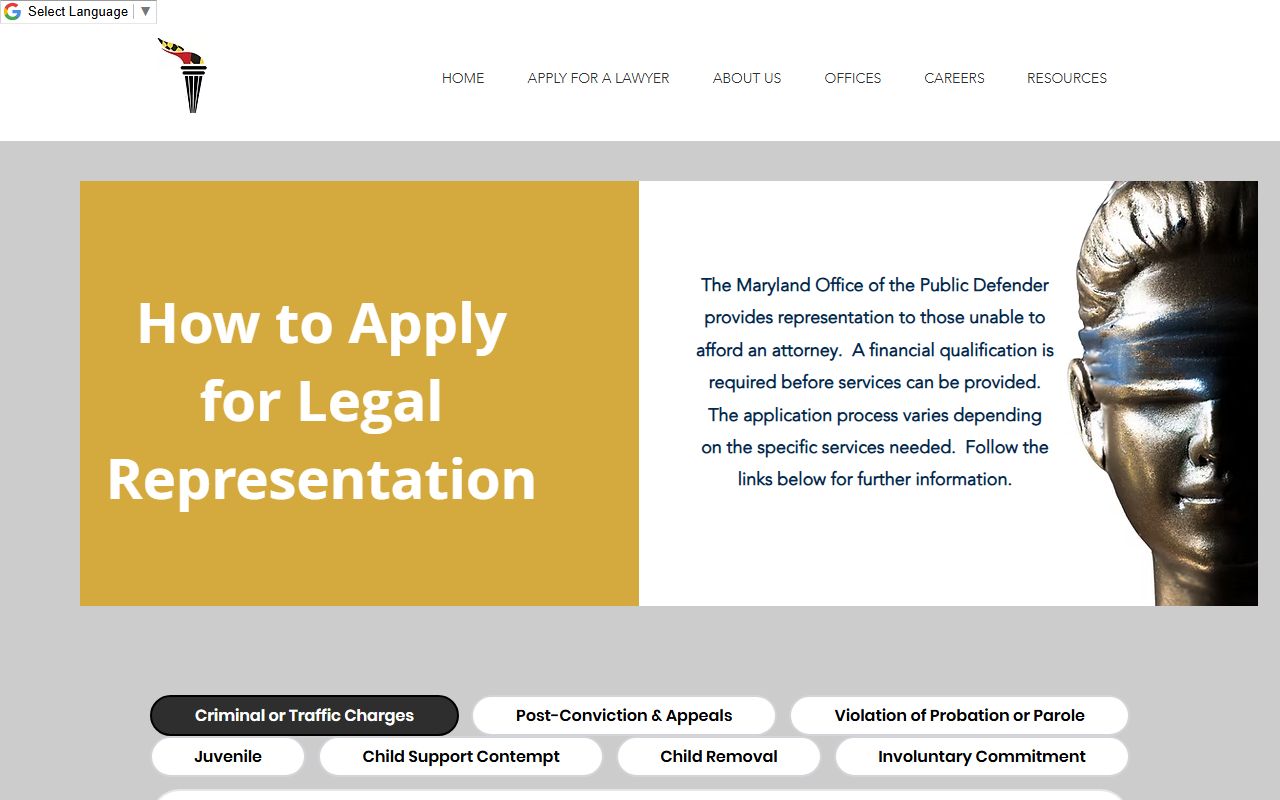
The OPD application page lets a person apply online or find the nearest office. Getting counsel early matters most when an arrest leads to a charge that carries jail time.
Restricted Criminal Records in Baltimore City
Not every arrest or criminal record is open. Maryland shields several types. Juvenile delinquency files are generally confidential under Courts and Judicial Proceedings § 3-8A-27. Grand jury proceedings stay secret. Pre-sentence reports and mental-health records are closed without a court order. Unserved arrest warrants do not appear on Case Search at all.
Sealed, shielded, and expunged matters are also off the public view by design. Some non-conviction outcomes were removed from online Case Search under 2024 changes, though they may stay public at the courthouse. Warrant events tied to a case are covered on the warrant records page, and the request process for agency files sits on the public records page.