
How to Search Baltimore City Court Records
The main tool is the Maryland Judiciary Case Search and Record Portal. It pulls cases from the District Court, the Circuit Courts, and the appellate courts. For Baltimore City you can reach both Circuit Court and District Court matters from one search. The service is free. It shows a summary of each case, not the full file. The complete record stays at the courthouse where the case was heard, and the Maryland Judiciary court records page says the same.
Gather a few details before you start. A case number works best. A full legal name works too. Since December 7, 2021, Case Search defaults to exact-name matching. For a partial name, type the first part of the last name and add a percent sign, like Smith%. If a search returns more than 500 records, the portal shows only the first 500, so a broad name search can hide the case you want.
- Open the official Case Search portal. Skip third-party search sites.
- Accept the terms if the portal asks.
- Pick Case Number Search when you have the number from a summons, notice, or docket sheet.
- Pick Party Name Search to look by a person or business, and select Baltimore City to narrow results.
- Add a filing date range, case type, or court to stay under the 500-record limit.
- Open the matching case and note the case number, court, type, and status.
- For the full file or a certified copy, contact the clerk where the case was filed.
The official Case Search FAQ spells out the wildcard and result-limit rules. The portal times out after two minutes of idle time. For a deeper walkthrough, see the Baltimore City court records page.
| Field Label | Type | Required | Notes / Format |
|---|---|---|---|
| Case Number Search | Tab | One path | Use when the exact case number is known. |
| Party Name Search | Tab | One path | Person, company, plaintiff, defendant, or attorney. |
| Last Name | Text | Yes (name path) | Exact-name default; first letters plus % for partials. |
| First Name | Text | No | Narrows a party search. |
| Court | Dropdown | No | District Court, Circuit Court, or appellate. |
| Case Type | Dropdown | No | Civil, criminal, traffic, or family. |
| Filing Date Range | Date | No | Trims broad searches under the 500 cap. |
The Baltimore City Court System
Maryland runs a state-level court system, so Baltimore City has no separate county court. Four levels matter. The Supreme Court of Maryland sits at the top. The Appellate Court of Maryland reviews most appeals. The Circuit Court for Baltimore City is the main trial court. The District Court of Maryland handles high-volume, lower-value matters at four city locations.
Each level hears different cases. The Circuit Court takes jury trials, felony cases, divorce, custody, large civil suits, juvenile matters, and appeals from the District Court. The District Court handles landlord-tenant cases, replevin, traffic, misdemeanors, certain felonies at early stages, and civil claims of $30,000 or less. The District Court does not hold jury trials. Probate is its own track through the Register of Wills and the Orphans' Court.
Case flow: District Court › Circuit Court › Appellate Court of Maryland › Supreme Court of Maryland
| Court | Level | Baltimore City Role |
|---|---|---|
| Supreme Court of Maryland | Highest appellate | Final review and court rulemaking. |
| Appellate Court of Maryland | Intermediate appellate | Reviews most Circuit Court appeals. |
| Circuit Court for Baltimore City | General trial | Jury trials, felonies, family, juvenile, large civil. |
| District Court of Maryland | Limited trial | Traffic, landlord-tenant, misdemeanors, small civil. |
| Orphans' Court / Register of Wills | Probate | Estates, wills, and contested probate. |
The two trial courts split the work in a clear way. The table below sets them side by side.
| Feature | Circuit Court | District Court |
|---|---|---|
| Jury trials | Yes | No |
| Civil limit | No fixed cap | $30,000 or less |
| Criminal | Felonies, jury cases | Misdemeanors, early felony stages |
| Family | Divorce, custody, support | Some protective orders |
| Locations | One downtown courthouse | Four city courthouses |
Baltimore City Courthouses
The Baltimore City court campus is not one building. Circuit Court functions center on the Calvert Street courthouse. The Register of Wills and Orphans' Court use Courthouse East. District Court work is spread across four neighborhoods. Always check the exact address and room before you go, because several court buildings share the Calvert Street corridor.
Circuit Court for Baltimore City
Clarence M. Mitchell, Jr. Courthouse
100 North Calvert Street
Baltimore, MD 21202
410-333-3722
Register of Wills & Orphans' Court
Elijah Cummings Building, Suite 311
111 North Calvert Street
Baltimore, MD 21202
410-752-5131
Public hours at these offices run 8:30 a.m. to 4:30 p.m., Monday through Friday, except legal holidays. Courthouse East screens all visitors, so allow extra time for security. The full set of District Court buildings appears on the Baltimore City Circuit Court page.
Types of Court Records Available in Baltimore City
Court records in Baltimore City fall into a few broad groups. Each group is tied to the court that creates it. Some are easy to pull online. Others sit only in the clerk's paper or electronic file.
The list below shows the main record types and where each one lives.
- Criminal records – felony cases in Circuit Court and misdemeanors in District Court; see arrest records.
- Civil records – suits, judgments, and small claims, depending on the dollar amount.
- Family records – divorce, custody, and support in Circuit Court; see marriage and divorce records.
- Probate records – estates and wills through the Register of Wills; see probate records.
- Traffic records – citations and motor-vehicle cases in District Court.
- Land records – deeds and liens through the clerk and the state land-record system.
What Baltimore City Court Records Show
A case summary in Case Search lists a set of common fields. Criminal, civil, traffic, and family cases share most of them. Some fields, such as date of birth, show only where the law allows. The full document set may need a clerk visit or authorized electronic access.
| Field | What It Shows |
|---|---|
| Case Number | Unique court ID for the matter. |
| Filing Date | Date the case was opened. |
| Parties | Plaintiff, defendant, petitioner, or respondent. |
| Charges / Cause | Offense or claim text in criminal and civil cases. |
| Disposition | Outcome, such as guilty, dismissed, or judgment. |
| Docket Entries | Chronological list of filings, hearings, and orders. |
Public Access Laws for Baltimore City Court Records
Two frameworks govern access. Agency records fall under the Maryland Public Information Act in the General Provisions Article. Court case records fall mostly under Maryland Rules 16-901 through 16-934. Most judicial records sit with the local clerk, while Case Search is the public summary. For agency records and the request process, the public records page goes deeper.
Key Statutes:
Maryland Code, General Provisions § 4-101 – defines public record, custodian, and other core terms.
Maryland Code, General Provisions § 4-201 – sets the basic right to inspect public records.
Maryland Code, General Provisions § 4-206 – covers response timing for a records request.
Maryland Code, Criminal Procedure § 10-105 – sets expungement eligibility for many non-conviction outcomes.
Records That Are Restricted or Confidential
Not every record is open. Maryland law shields several categories. Juvenile delinquency files are generally confidential under Courts and Judicial Proceedings § 3-8A-27. Adoption files are confidential under Family Law § 5-359. Grand jury proceedings stay secret under Courts and Judicial Proceedings § 9-109. Mental-health and pre-sentence reports are also closed without a court order.
A record can also be sealed, shielded, or expunged. Expungement removes eligible items from public view across court and police files. Shielding hides a record but keeps it for authorized use. To view a sealed record, a person usually files a motion and the clerk applies to the administrative judge. Keep copies of any expungement order, because the record may be hard to get later.
Specialty Courts in Baltimore City
Maryland uses problem-solving courts across the state, and Baltimore City has run several treatment tracks. A drug treatment court serves people whose charges tie back to substance use. The model blends judicial oversight, treatment, drug testing, case management, and regular review hearings. Some participants are diverted from standard prosecution; others enter structured supervision after a plea.
Behavioral health diversion also matters in a high-volume city like Baltimore. These programs screen for a qualifying diagnosis, weigh public safety, and require a treatment plan. The State's Attorney, the Office of the Public Defender, and local health partners all play a role. Program rules and eligibility change, so confirm current terms with the court or with counsel before you rely on them.
Federal Courts Serving Baltimore City
Some Baltimore matters are federal, not state. The U.S. District Court for the District of Maryland sits at the Edward A. Garmatz U.S. Courthouse, 101 West Lombard Street. It hears federal crimes, civil rights suits, and federal-question cases.
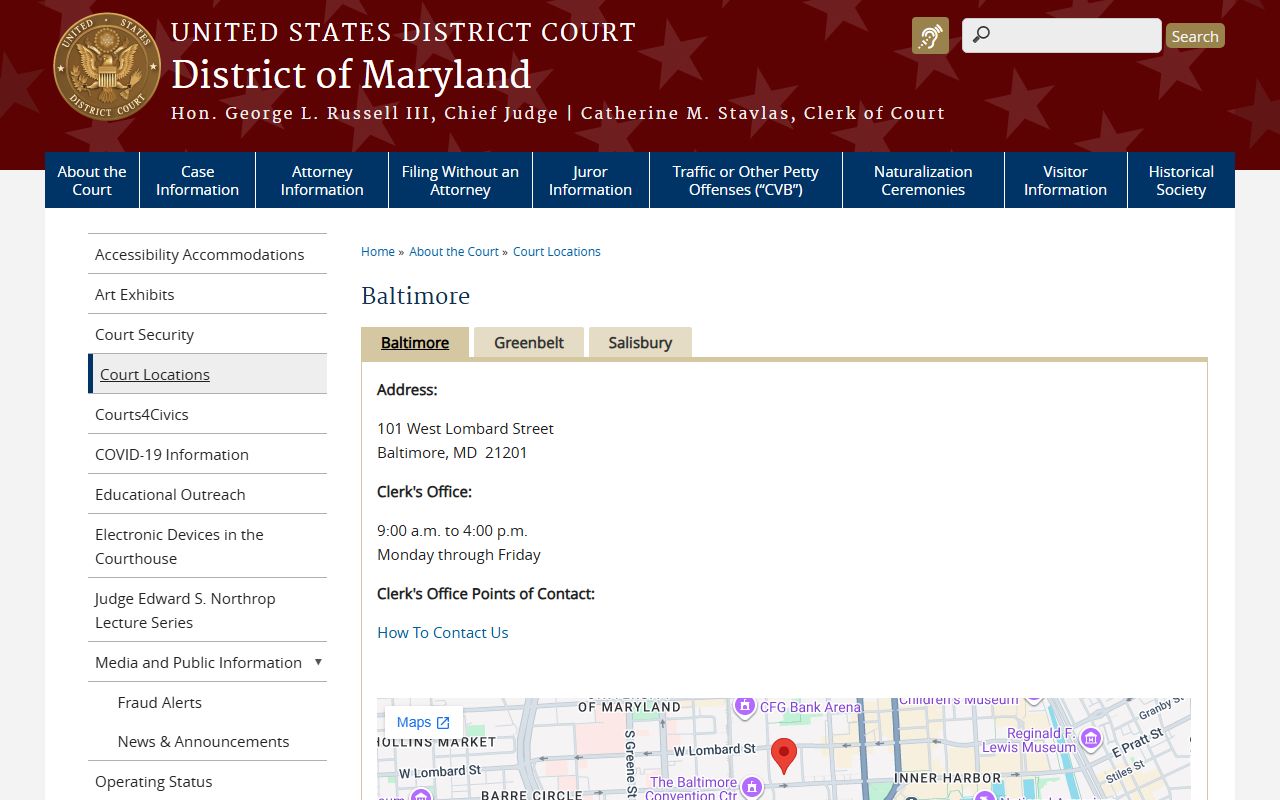
The Baltimore courthouse page lists divisions, judges, and visitor rules. Bankruptcy is handled separately by the U.S. Bankruptcy Court for the District of Maryland.
That court's locations page places the Baltimore Division in the same Garmatz building, Suite 8530.
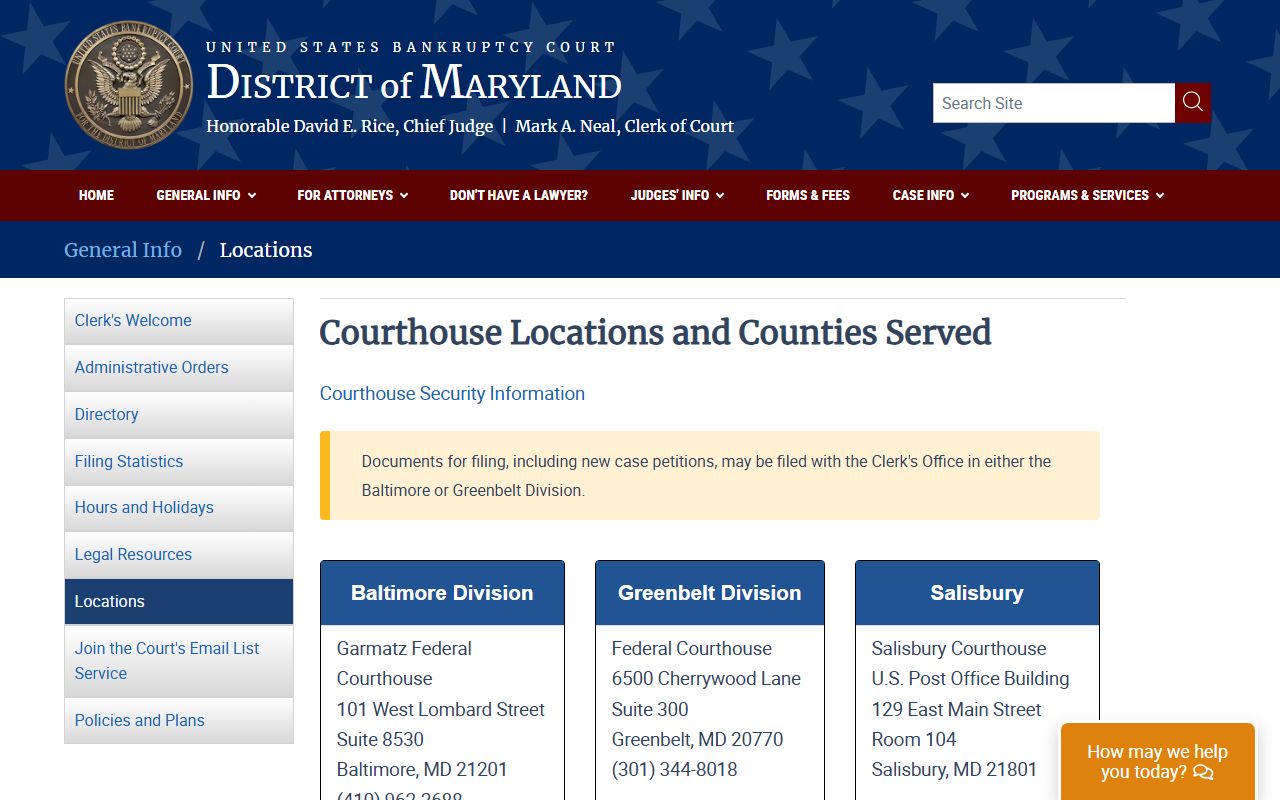
Filings may go to the Baltimore or Greenbelt Division. Federal prosecutions come from the U.S. Attorney for the District of Maryland.
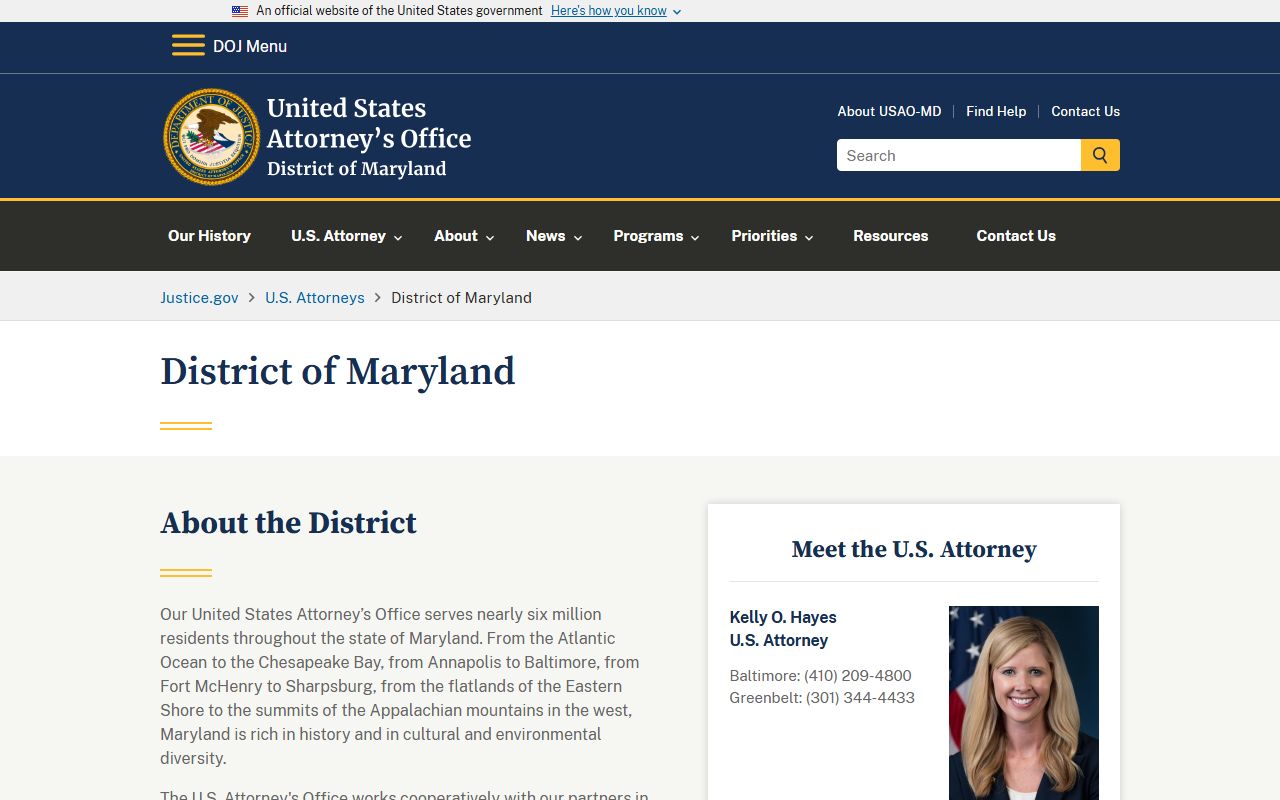
The U.S. Attorney's office serves the whole state and runs criminal and civil divisions based in Baltimore.
For official federal dockets, register with PACER at pacer.uscourts.gov. A free alternative for many opinions is CourtListener.
CourtListener lets you search opinions and some dockets at no cost, though it is not the official record.
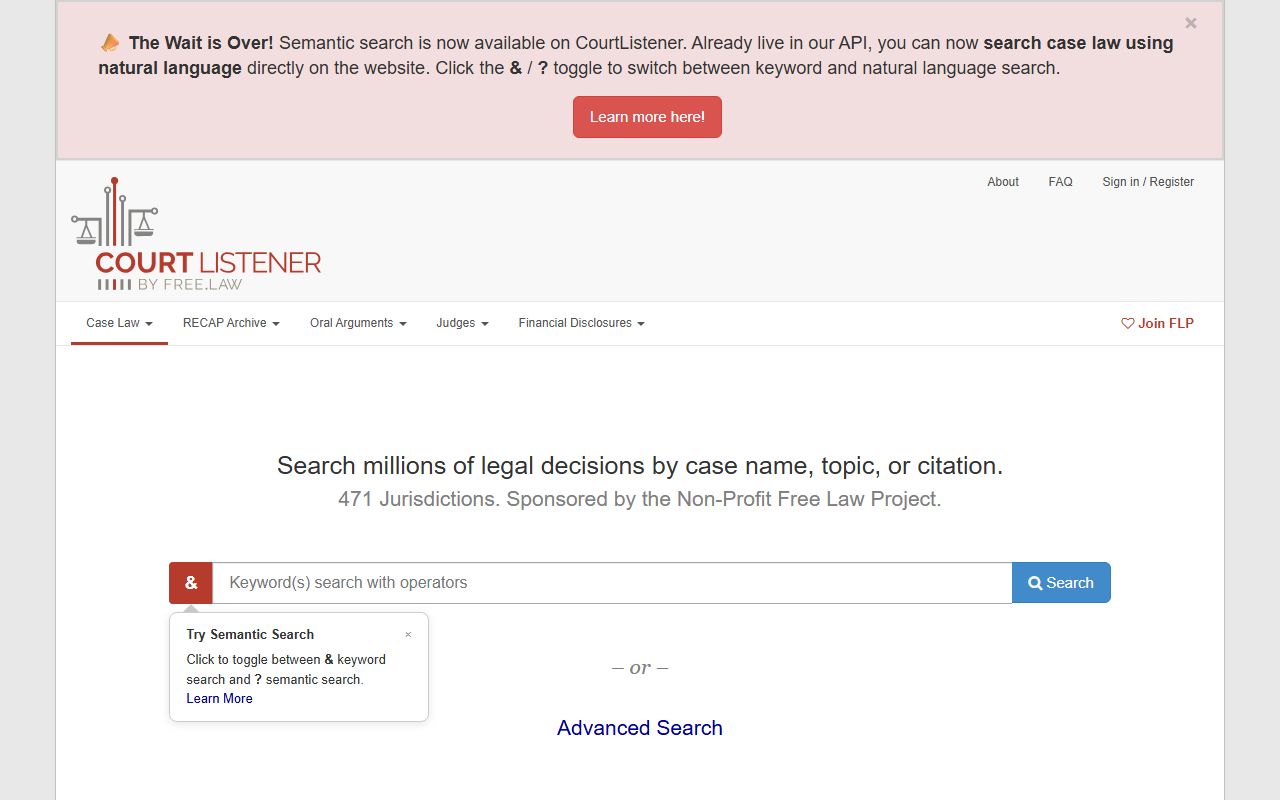
Treat CourtListener as a research aid, then confirm anything important against PACER or the clerk.
Baltimore City Detention and Inmate Information
Baltimore City is unusual. Jail and pretrial detention are run by the state, through the Maryland Department of Public Safety and Correctional Services, not by a county sheriff. The Baltimore City Sheriff's Office still handles courthouse security, civil process, evictions, and warrant work. People arrested in the city move through the Baltimore Central Booking and Intake Center.
To find someone in custody, use the DPSCS Incarcerated Individual Locator. For the full process, see the Baltimore City inmate records page, check released inmates for verification paths, review jail population data for facility numbers, and read warrant records for how warrant events appear.
Marriage, Divorce, and Probate Records
Marriage licenses come from the Circuit Court clerk's Land Records and Licenses office. Divorce cases are Circuit Court family records, so the judgment and file sit with the clerk. Estate and will matters go through the Register of Wills and the Orphans' Court. Start with marriage and divorce records or probate records to match a need to the right office.
- Testator
- The person who made a will.
- Personal Representative
- The person who settles an estate, also called an executor.
- Intestate
- Dying without a valid will.
- Decedent
- The person who has died, whose estate is being handled.
Baltimore City Court Records Fees
Copy fees at the clerk's office are set and modest. Plain copies run a flat rate per page. Certified copies cost more, since the clerk attests to them. A mail request without return postage adds a small charge. Confirm current amounts with the office before you send payment, and see the Clerk of the Circuit Court page for the full schedule.
| Item | Amount |
|---|---|
| Plain copy per page | $0.50 |
| Certified copy per instrument | $5.00 |
| Mail request without return postage | Add $2.00 |
| Authentication of notary | $1.00 per document |
How to Interpret Baltimore City Court Records
Docket terms trip up many readers. A charge is not a conviction. A disposition is the outcome. Nolle prosequi means the prosecutor dropped the charge. Stet is an inactive status that can reopen within limits. An acquittal is a not-guilty finding. A judgment is a final civil decision that may award money or relief.
Read the docket from the top down to follow the case. Each line is an event, such as a filing, a motion, a hearing, or an order. If a term is unclear, the Baltimore City court dockets page explains how dockets are built and refreshed.
Accuracy and Record Limitations
Online records lag the courtroom. Weekly District Court dockets refresh each evening, and last-minute changes happen. Case Search is a summary, so it can miss a recent filing or a document. Some criminal outcomes were pulled from online view under 2024 changes but may still be public at the courthouse.
Note: Confirm any court date, charge, or disposition with the clerk's office before you rely on it, since online data can lag or omit recent events.
History of Baltimore City Courts
Baltimore City has a distinct legal past as an independent city. It once had a Supreme Bench of Baltimore City before the modern Circuit Court took shape. State records note that four city courts were authorized in 1851, including a Circuit Court and a Criminal Court. The modern Circuit Court for Baltimore City absorbed the general trial role.
The big recent change is technology. On May 6, 2024, Baltimore City Circuit and District Courts joined Maryland Electronic Courts, or MDEC. That move completed a statewide rollout that began in 2014. It made attorney e-filing the rule and tied the city into one statewide case system. Older files may carry legacy quirks, while new cases follow MDEC.
Frequently Asked Questions
How do I search Baltimore City court records online?
Use Maryland Judiciary Case Search and pick Case Number, Party Name, or Advanced Search. Select Baltimore City when you can. Case Search is a summary, so use it to find the case number, court, status, and docket. Then contact the clerk for the full file or a certified copy.
Is Case Search the official court file?
No. The Maryland Judiciary calls Case Search a summary of the official file. The complete record is in the clerk's office where the case was heard. For sensitive criminal outcomes that no longer appear online, a courthouse visit may be the only way to view them.
Does Baltimore City have its own jail roster?
No county sheriff roster exists. Baltimore City detention is state-run by DPSCS. Use the DPSCS Incarcerated Individual Locator, then call the facility for current details. The locator does not list people who have already left custody.
More answers sit on the Baltimore City court records FAQ page.